Retaining wall service
Seat Walls and Planter Walls in San Diego County
San Diego Elite Retaining Walls builds seat walls and planter walls around patios, fire pits and garden slopes, in block, stone or stuccoed masonry to match the yard.
What's included
- Footing or compacted base sized for the wall
- Block, stone or stuccoed masonry with a seat-depth cap
- Waterproofing inside planters and drainage at the base
- Tie-in to an existing patio, retaining wall or steps
- Serving homes across San Diego County
- Written estimate before work starts
- Drainage planned into every wall
- Permit questions answered up front
Are seat walls and planter walls right for you?
Who it's for
- Patios and fire pit areas that need built-in seating
- Raised beds for vegetables or easier gardening
- Short slopes at the edge of a patio
Problems it solves
- Planter walls with white stains and peeling paint
- A patio with nowhere to sit
- Soil spilling off a slope onto the patio
How it works
- Call or send a message about the wall or slope
- Site visit to check height, soil, drainage and access
- Written estimate, then the build or repair
What are seat walls and planter walls?
Short answer
A seat wall is a low wall built at sitting height, usually around 18 to 20 inches, with a wide cap on top. A planter wall holds soil for a raised bed. Both are often short retaining walls, and they need a solid base and a way for water to drain like taller ones do.
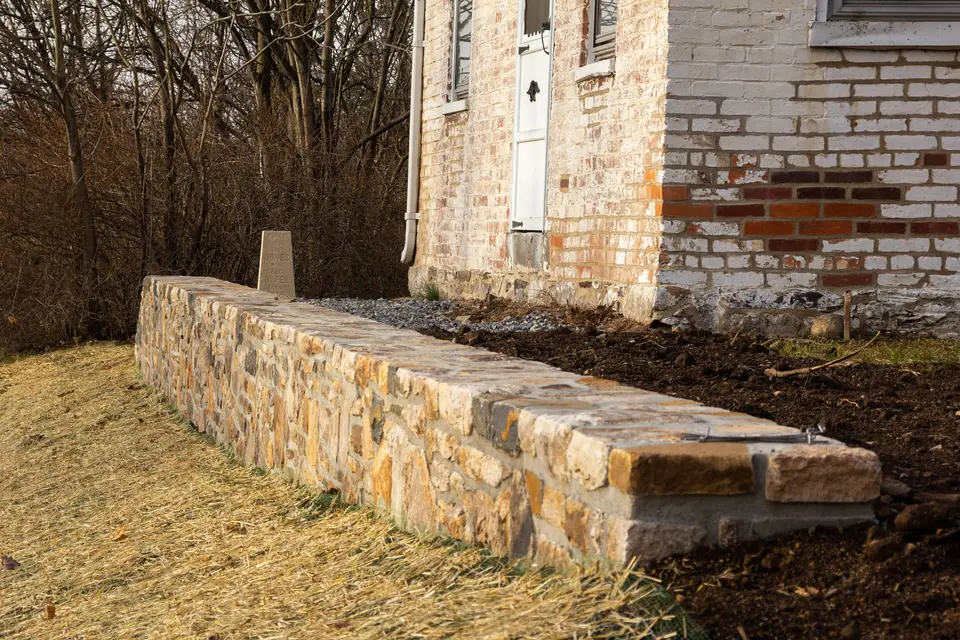
A seat wall at the edge of a patio often holds back a foot or two of slope while giving people a place to sit, so it gets built as a retaining wall first. The cap is the part people touch. It should be deep enough to sit on and smooth enough not to snag clothes.
Planter walls hold wet soil all the time, which is hard on any wall. Raised planters need weep holes or a drain at the bottom, and a block or stucco planter should be waterproofed on the inside so irrigation water doesn't stain the outside. One built against the house needs a gap or flashing so it doesn't trap water against the stucco or siding.
Seat Walls and Planter Walls across San Diego County
Based in San Diego and available in each of these areas.
Related services
Retaining Walls for Pools and Patios
Walls that cut into a slope to make level ground for a pool, spa, patio or outdoor kitchen.
Natural Stone Retaining Walls
Dry-stacked, mortared and veneered stone walls for gardens and slopes that call for a natural look.
Block Retaining Walls
Segmental concrete block walls for garden beds, terraces and taller reinforced walls.
Ask about seat walls and planter walls
Send a short message about your wall or slope and we'll call you back to set up a site visit.
- Site visit to look at the slope, soil and drainage
- Written estimate before any work starts
- Permit and engineering questions answered up front
Prefer to talk? Call (760) 539-8329
Seat Walls and Planter Walls questions
How tall should a seat wall be?
Most are built so the top of the cap lands around 18 to 20 inches above the patio, close to chair height. Lower walls feel awkward to sit on, and taller ones leave feet dangling.
How much does a seat wall cost?
The price depends on the length, the material and the cap. Block with a precast cap usually costs the least, while natural stone, stucco finishes and thick stone caps cost more. A seat wall that also holds back soil needs a base, gravel and a drain like any short retaining wall.
How deep should a seat wall be?
A cap at least 12 inches deep is comfortable to sit on, and many are 14 to 18 inches. The wall below can be narrower than the cap, with the cap overhanging the face by an inch or two.
How far should a seating wall be from a fire pit?
Common design guidance puts seating at least 2 to 3 feet from the edge of the fire pit, with gas pits at the closer end and wood-burning pits farther back. Many layouts leave more room so people can move away from heat and smoke. The fire pit maker's instructions and local fire rules set the minimum.
Do planter walls need drainage?
They do. Water has to leave the bottom of the planter through weep holes or a drain, or the soil stays soggy and the wall stains and gets pushed out over time.