Retaining wall service
Retaining Wall Drainage in San Diego County
San Diego Elite Retaining Walls adds and fixes the drainage behind retaining walls. Water is the main reason walls fail, and good drainage lets it out before it can push.
What's included
- Check of existing drains, outlets and weep holes
- Drain rock and filter fabric behind the wall
- Perforated drain pipe routed to a proper outlet
- Grading or a swale to steer runoff away from the top of the wall
- Serving homes across San Diego County
- Written estimate before work starts
- Drainage planned into every wall
- Permit questions answered up front
Is retaining wall drainage right for you?
Who it's for
- Walls that stay damp or stain after watering or rain
- Yards where water pools behind or at the base of a wall
- New walls on clay soil or below a slope
Problems it solves
- Water seeping through the wall face
- Soggy ground behind the wall
- White mineral stains on concrete
How it works
- Call or send a message about the wall or slope
- Site visit to check height, soil, drainage and access
- Written estimate, then the build or repair
What is retaining wall drainage?
Short answer
Retaining wall drainage is the system that moves water out from behind a wall: free-draining gravel against the back of the wall, filter fabric to keep soil out of the gravel, a perforated pipe at the base, and an outlet or weep holes where the water can leave.
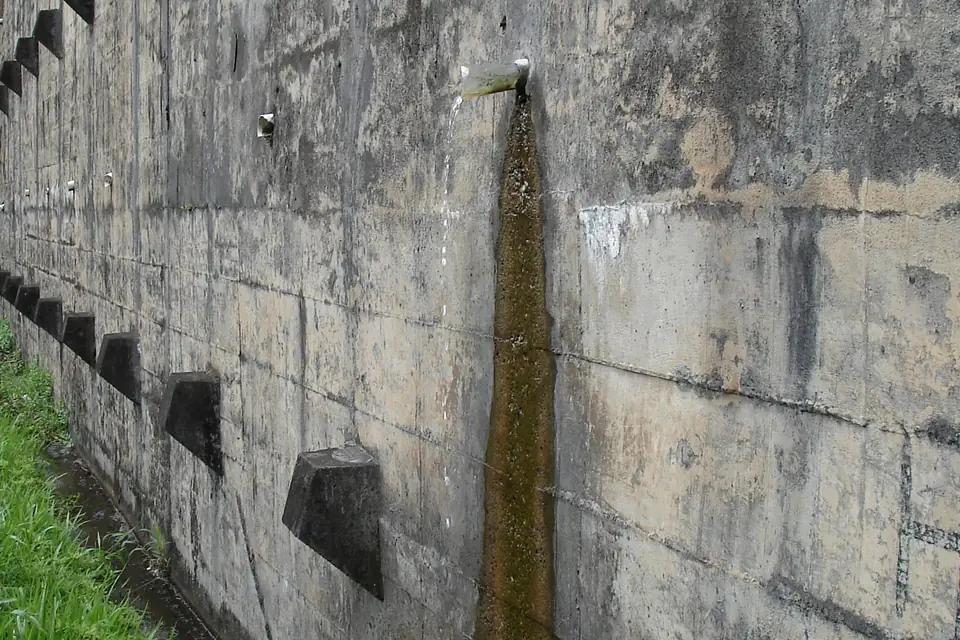
Wet soil is much heavier than dry soil and pushes harder on a wall. Most of the year is dry in San Diego County, so poor drainage often goes unnoticed until a wet winter, when a wall can lean or bulge within weeks.
Clay soils make it worse because they swell when wet and hold water against the wall. Sprinklers, roof downspouts and runoff from the slope above can also send water behind a wall all year.
Retaining Wall Drainage across San Diego County
Based in San Diego and available in each of these areas.
Related services
Retaining Wall Repair
Fixes for leaning, cracked and bulging walls, starting with why the wall moved.
Retaining Wall Installation
New retaining walls for slopes, terraces and level yards, planned around height, soil and drainage.
Hillside Terracing
Tiered walls that turn a steep slope into level, usable yard space.
Ask about retaining wall drainage
Send a short message about your wall or slope and we'll call you back to set up a site visit.
- Site visit to look at the slope, soil and drainage
- Written estimate before any work starts
- Permit and engineering questions answered up front
Prefer to talk? Call (760) 539-8329
Retaining Wall Drainage questions
How much does retaining wall drainage cost?
On a new wall, drainage is part of the build and adds modestly to the price. Adding it to an existing wall costs more, since the soil behind the wall often has to be dug out to place gravel, fabric and pipe. Length of the wall, access and where the water can be sent drive the rest.
What is the best drainage for a retaining wall?
The standard setup is clean drain rock behind the wall, filter fabric to keep soil out of the rock, and a perforated pipe at the base that carries water to an outlet. Solid walls of concrete or grouted block also get weep holes or waterproofing. Grading or a swale at the top keeps surface runoff from pouring in behind the wall.
Do retaining walls need weep holes?
Solid walls of poured concrete, grouted block or mortared stone usually need weep holes or a drain pipe outlet so water can get out. Dry-stacked block and stone walls drain through their joints but still need gravel and a pipe behind them. Weep holes work best with drain rock behind them, or soil plugs them.
Can you add drainage to an existing retaining wall?
Sometimes. Weep holes can be drilled through some solid walls, and a drain can be added by digging behind part of the wall. On others the backfill has to come out to install the drain properly, which is close to a rebuild.
Does a small retaining wall need drainage?
Even a 2-foot wall does better with gravel behind it and a way for water to get out. Short walls can sometimes skip the perforated pipe if the soil drains well, but in clay soil or under sprinklers, water builds up behind short walls too and pushes them out of line.