Retaining wall service
Block Retaining Walls in San Diego County
San Diego Elite Retaining Walls builds interlocking concrete block walls, the most common retaining wall in San Diego County yards. Block can shift a little without cracking, and there's a color for almost any house or HOA.
What's included
- Excavation and a compacted gravel leveling pad
- Block courses set level with the required setback
- Geogrid reinforcement where the height calls for it
- Drain rock, filter fabric, a perforated drain pipe and cap blocks
- Serving homes across San Diego County
- Written estimate before work starts
- Drainage planned into every wall
- Permit questions answered up front
Are block retaining walls right for you?
Who it's for
- Garden and planter walls a few feet tall
- Terraced backyards with two or three short walls
- Homes in HOAs with approved block styles and colors
Problems it solves
- A slope crowding a patio or walkway
- Mismatched or crumbling old garden walls
- Planter beds that wash out every winter
How it works
- Call or send a message about the wall or slope
- Site visit to check height, soil, drainage and access
- Written estimate, then the build or repair
What are block retaining walls?
Short answer
A segmental block retaining wall is built from interlocking concrete units stacked without mortar on a compacted gravel base. Each course steps back slightly into the slope, and taller walls tie into the soil behind them with layers of geogrid.
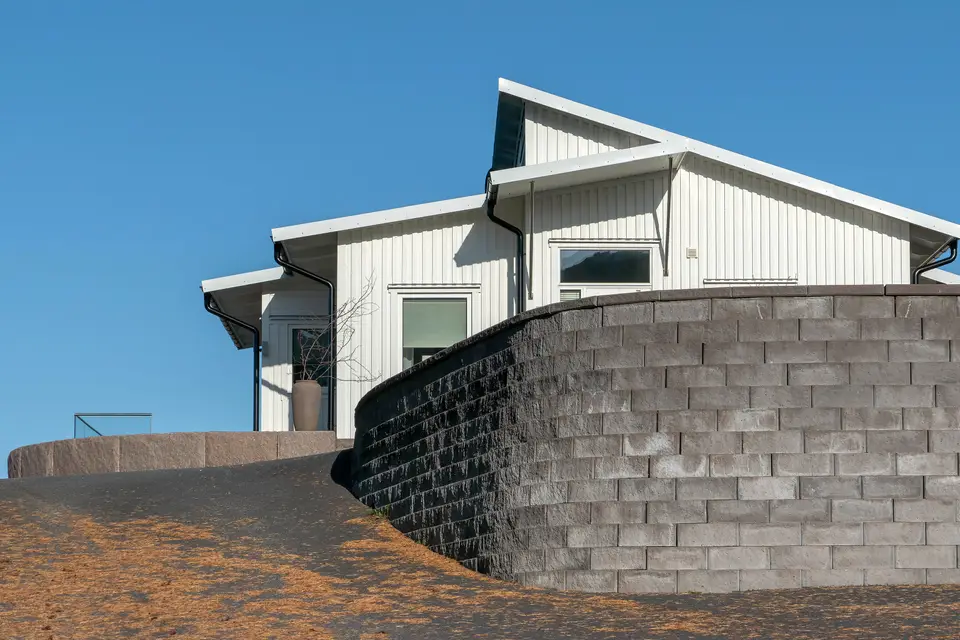
Block walls can shift a little without breaking, which helps on clay soils that swell and shrink with the seasons. Blocks come in many face textures and colors, so a new wall can be matched to existing walls or HOA standards.
Short garden walls usually need only a solid base and drainage. Somewhere around 3 to 4 feet, or with a driveway or slope above, the design typically adds geogrid layers and an engineer's plan. Each block maker publishes design tables that set the limits for its blocks.
Block Retaining Walls across San Diego County
Based in San Diego and available in each of these areas.
Related services
Retaining Wall Installation
New retaining walls for slopes, terraces and level yards, planned around height, soil and drainage.
Hillside Terracing
Tiered walls that turn a steep slope into level, usable yard space.
Retaining Wall Drainage
Drain rock, pipes and weep holes that keep water from pushing a wall over.
Ask about block retaining walls
Send a short message about your wall or slope and we'll call you back to set up a site visit.
- Site visit to look at the slope, soil and drainage
- Written estimate before any work starts
- Permit and engineering questions answered up front
Prefer to talk? Call (760) 539-8329
Block Retaining Walls questions
How much does a block retaining wall cost?
The price of a segmental block wall depends on the block style, the wall's height and length, and whether it needs geogrid. Short walls on level ground are the least expensive to build, while taller walls add grid, more digging and compacted backfill behind the face. Access, soil haul-off and the drain behind the wall also move the number.
How tall can a block retaining wall be?
Without reinforcement, most segmental block walls top out around 3 to 4 feet, depending on the block maker's design tables and what sits above the wall. With geogrid and an engineered design, block walls can go much taller. Over 4 feet from the bottom of the footing, or with a surcharge above, a permit is usually required, and the city or County confirms the limit for your address.
How long do block retaining walls last?
A well-built segmental block wall can last 50 years or more. The concrete units themselves hold up well, so failures usually come from the base, missing geogrid or water building up behind the wall.
Is a block retaining wall cheaper than concrete?
For most residential heights, block costs less because it needs no forms, rebar or concrete trucks. That can flip on tall walls that need a lot of geogrid and digging, or in tight spaces with no room for the reinforced soil behind the wall.
Should retaining wall blocks be glued?
Only the cap blocks on top are usually glued, with a concrete adhesive made for landscape block. The wall courses below stay dry-stacked and are held by their weight, the setback into the slope, and pins or lips on the units, which lets the wall flex a little as soil moves.