Retaining wall service
Natural Stone Retaining Walls in San Diego County
San Diego Elite Retaining Walls builds natural stone retaining walls, dry-stacked or set in mortar, for gardens and slopes where block would look out of place.
What's included
- Stone chosen for the wall height and the look you want
- Compacted gravel base for dry-stacked walls, or a concrete footing for mortared ones
- Stone set with a slight backward lean and tight joints
- Gravel backfill, filter fabric and a drain behind the wall
- Serving homes across San Diego County
- Written estimate before work starts
- Drainage planned into every wall
- Permit questions answered up front
Are natural stone retaining walls right for you?
Who it's for
- Garden walls and planting terraces a few feet tall
- Older homes and Spanish or Craftsman styles where block looks wrong
- Existing block walls that need a stone face
Problems it solves
- A plain gray wall that clashes with the house
- Loose stones falling out of an old dry wall
- A garden slope with no clear edge between beds
How it works
- Call or send a message about the wall or slope
- Site visit to check height, soil, drainage and access
- Written estimate, then the build or repair
What are natural stone retaining walls?
Short answer
A natural stone retaining wall uses quarried stone or fieldstone to hold back soil. It can be dry-stacked with no mortar, laid in mortar on a concrete footing, or applied as veneer over a reinforced block or concrete wall that does the structural work.
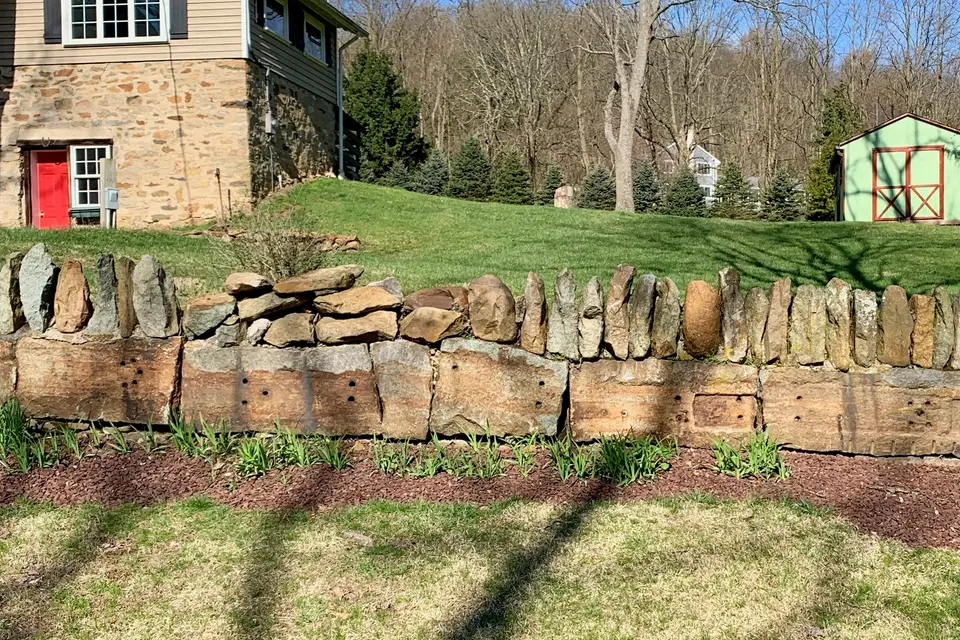
Dry-stacked stone holds by weight and by leaning back into the slope, and the gaps between stones let water out. It suits low garden walls and planting terraces. Taller walls, and walls under real load, are usually reinforced block or concrete with stone veneer on the face, so you see stone and the engineered core stays hidden.
The stone you pick changes how the wall goes together. Flat, layered ledgestone stacks tightly and builds quickly. Rounded river rock and irregular fieldstone take more fitting and more mortar. Mortared walls still need weep holes and a drain behind them, because the joints block water that a dry wall would let through.
Natural Stone Retaining Walls across San Diego County
Based in San Diego and available in each of these areas.
Related services
Boulder Retaining Walls
Walls of large boulders set by excavator, suited to rocky hillsides and larger lots.
Seat Walls and Planter Walls
Low walls built to sit on or plant in, often tied into a patio or a retaining wall.
Masonry Block Walls
Grouted, rebar-reinforced concrete block walls for retaining soil or screening a yard, finished in stucco, veneer or plain block.
Ask about natural stone retaining walls
Send a short message about your wall or slope and we'll call you back to set up a site visit.
- Site visit to look at the slope, soil and drainage
- Written estimate before any work starts
- Permit and engineering questions answered up front
Prefer to talk? Call (760) 539-8329
Natural Stone Retaining Walls questions
How much does a stone retaining wall cost?
Natural stone walls usually cost more than block because the stone costs more and each piece is fitted by hand. Flat ledgestone goes up faster than rounded or irregular stone, and dry-stacked walls skip the footing a mortared wall needs. Stone veneer over a block or concrete core costs more again but allows taller walls.
How long does a stone retaining wall last?
A properly built stone wall can last for generations, since the stone itself barely wears. Dry-stacked walls may need a few stones reset over time, and mortared walls last as long as their footing and drainage hold up.
What is the best stone for a retaining wall?
Flat, layered stone like ledgestone or flagstone stacks tightly and is the easiest to build a stable wall with. Rounded river rock looks good but takes more fitting and often needs mortar. For tall walls, stone veneer over a reinforced block or concrete core gives the stone look with engineered strength.
Can you build a stone retaining wall without mortar?
Dry-stacked stone walls are built with no mortar at all, holding by weight and a slight backward lean. Most are kept low, often 3 feet or less. Taller stone walls are usually veneer over a reinforced core, and walls over 4 feet from the bottom of the footing generally need a permit.
Do stone retaining walls need drainage?
Every retaining wall does. Dry-stacked walls let some water through the joints but still need gravel behind them so soil doesn't wash into the gaps, and mortared stone needs a drain and weep holes like any solid wall.