Retaining wall service
Boulder Retaining Walls in San Diego County
San Diego Elite Retaining Walls builds boulder retaining walls on hillsides and larger lots, setting each stone by machine against a cut slope.
What's included
- Excavation of the cut and a firm, level base for the first row
- Boulders sorted by size and set by excavator
- Smaller rock chinked into the gaps between boulders
- Drain rock and filter fabric behind the wall, with planting pockets at the top if wanted
- Serving homes across San Diego County
- Written estimate before work starts
- Drainage planned into every wall
- Permit questions answered up front
Are boulder retaining walls right for you?
Who it's for
- Large lots with room for an excavator and truck access
- Rocky hillsides where boulders are already on site
- Owners who want a wall that blends into a natural slope
Problems it solves
- A raw cut slope left after grading
- A driveway edge that keeps sloughing onto the pavement
- Loose rock and soil sliding after rain
How it works
- Call or send a message about the wall or slope
- Site visit to check height, soil, drainage and access
- Written estimate, then the build or repair
What are boulder retaining walls?
Short answer
A boulder retaining wall, sometimes called a rockery, is a stack of large stones placed one at a time with an excavator. The bottom row is set into the ground, each row above sits back a little, and gravel behind the stones lets water drain out.
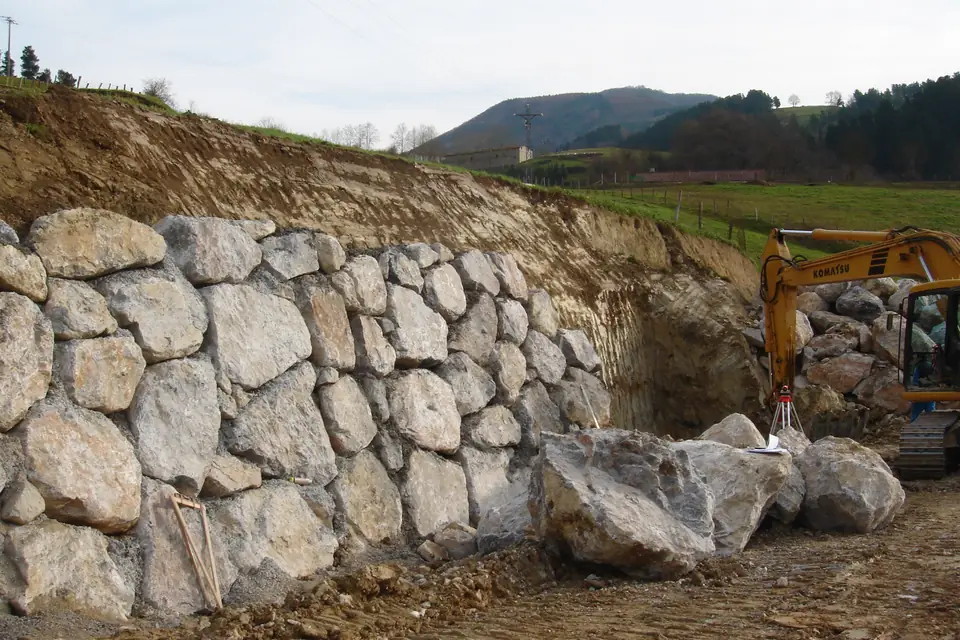
Boulders hold by weight and friction. In a well-built wall the biggest stones go at the bottom, each stone rests on two below it, and the long side of each one points back into the slope. Smaller rock gets chinked into the gaps so soil can't wash through.
The catch is space. An excavator has to reach the wall, and the stones plus the gravel behind them take more depth than a block wall. In Poway and the rockier parts of East County, some boulders can come from the site itself, which cuts down on hauling. A boulder wall over 4 feet tall is treated like any other tall wall and usually needs engineering and a permit.
Boulder Retaining Walls across San Diego County
Based in San Diego and available in each of these areas.
Related services
Hillside Terracing
Tiered walls that turn a steep slope into level, usable yard space.
Slope Stabilization
Drainage, erosion control, planting, regrading and walls to keep a hillside yard in place.
Natural Stone Retaining Walls
Dry-stacked, mortared and veneered stone walls for gardens and slopes that call for a natural look.
Ask about boulder retaining walls
Send a short message about your wall or slope and we'll call you back to set up a site visit.
- Site visit to look at the slope, soil and drainage
- Written estimate before any work starts
- Permit and engineering questions answered up front
Prefer to talk? Call (760) 539-8329
Boulder Retaining Walls questions
How much does a boulder retaining wall cost?
Boulder walls are priced mostly on the size and amount of stone, trucking and excavator time. Using boulders already on the site can bring the cost down a lot, while trucked-in stone and tight access push it up. Height matters too, since taller walls need much bigger base stones.
Is a boulder retaining wall better than block?
Each fits a different site. Boulders suit large lots, rocky hillsides and a natural look, and they need room for an excavator and more depth behind the wall. Block takes less space, gives a clean, even face and is easier to build to an exact height and line.
How tall can a boulder retaining wall be?
Most residential boulder walls stay under about 4 feet, which keeps them simple to build. Taller boulder walls can be done with bigger base stones, but past the local limit, about 3 or 4 feet depending on the city, they are treated like any other tall wall and usually need engineering and a permit. The city or County confirms the limit for your address.
How long do boulder retaining walls last?
A boulder wall set on a firm base with gravel and filter fabric behind it can last for decades with little upkeep. Settling happens when fine soil washes out through the gaps, so the fabric and chinking stones matter.
Do boulder retaining walls need drainage?
They drain better than solid walls because water passes through the gaps, but the soil behind still needs gravel and filter fabric. Without them, fine soil washes out through the joints and the stones settle.